
Startup Funding News, October 2026: The Biggest Rounds and What They Tell Us
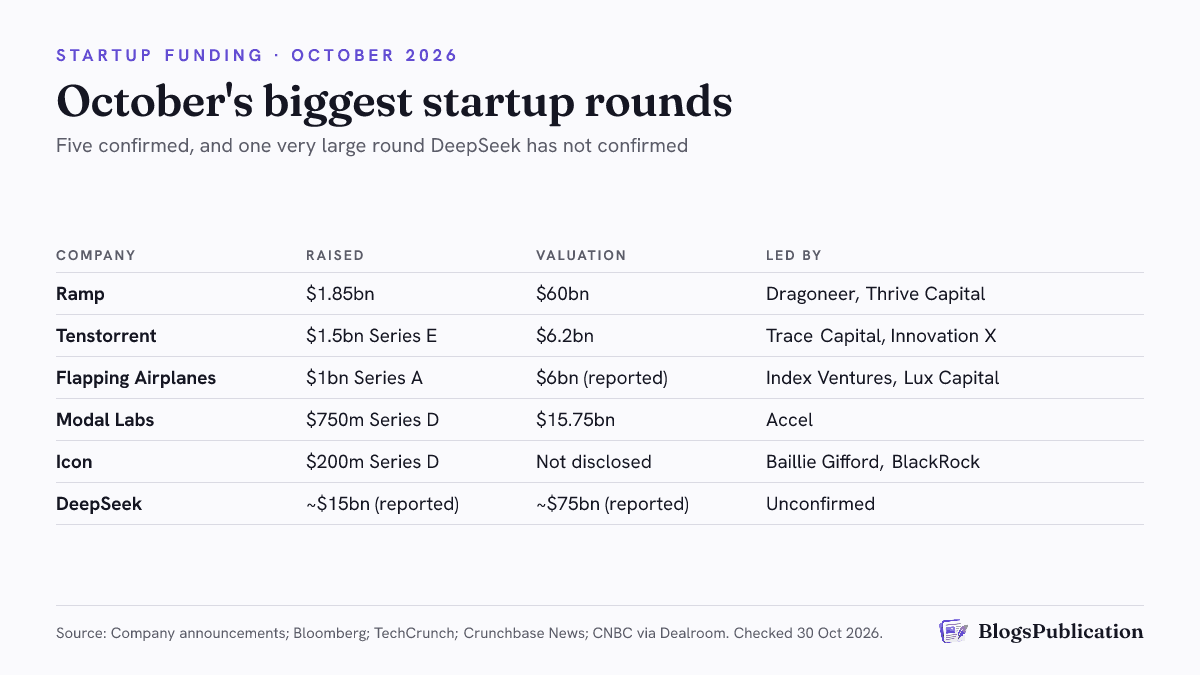
The biggest startup cheques of October 2026 went to AI infrastructure and to one fintech growing very fast. Ramp raised $1.85 billion at a $60 billion valuation (15 October). Tenstorrent closed a $1.5 billion Series E at $6.2 billion (19 October). Flapping Airplanes, an AI lab about a year old with no product on sale, announced a $1 billion Series A (21 October). Modal Labs raised $750 million at $15.75 billion.
The largest number of the month is the least certain: a DeepSeek round reported at about $15 billion, which the company has not confirmed.
Behind the headlines is a market that is enormous and narrow at once. Startups raised $159 billion worldwide in the third quarter, Crunchbase counted, with a record 27 rounds of $1 billion or more taking about a third of it, and AI companies taking 64%.
Key takeaways
- Biggest confirmed rounds: Ramp $1.85bn, Tenstorrent $1.5bn, Flapping Airplanes $1bn, Modal Labs $750m, Icon $200m.
- Biggest reported round: DeepSeek, about $15bn at a valuation of roughly $75bn — unconfirmed, with figures that differ between reports.
- Q3 2026: $159bn globally, down 25% on Q2 but up 53% on a year earlier; $679bn in the first nine months, a record.
- Concentration: 27 companies raised about a third of Q3's money; half of it went to companies founded since 2022.
- What it means for most founders: a record total does not mean easier money — or easier attention.
The biggest startup funding rounds of October 2026
Confirmed by the company or first reported by a named outlet, as marked. Valuations are post-money unless stated.
| Company | What it does | Raised | Valuation | Led by | Announced |
|---|---|---|---|---|---|
| Ramp | Corporate cards and spend management | $1.85bn | $60bn | Dragoneer and Thrive Capital, per Bloomberg | 15 October |
| Tenstorrent | AI chips and computers | $1.5bn Series E | $6.2bn | Trace Capital and Innovation X | 19 October |
| Flapping Airplanes | AI research lab | $1bn Series A | $6bn, reported by Bloomberg | Index Ventures and Lux Capital | 21 October |
| Modal Labs | Cloud infrastructure for AI inference | $750m Series D | $15.75bn | Accel | Week of 10–16 October |
| Icon | Robotic construction, 3D-printed homes | $200m Series D | Not disclosed | Baillie Gifford and BlackRock | Week of 10–16 October |
| DeepSeek | AI models | About $15bn (reported) | About $75bn (reported) | Not disclosed | Reported from 6 October; unconfirmed |
Just outside the month, Instinct, which makes a personal AI assistant, raised a $1 billion Series C at a $10 billion valuation on 28 September, a month after a round that valued it at $2.5 billion, TechCrunch reported.
What the big rounds have in common
Four of the six are about compute — making it, renting it out or needing a great deal of it. Tenstorrent designs AI chips and is raising to manufacture them at volume. Modal sells cloud capacity for running AI models. DeepSeek and Flapping Airplanes build models, which is where the compute goes.
Ramp is the odd one out, and it shows what investors pay for at this scale when compute is not the story: revenue. Ramp said its annualised revenue had passed $2 billion, up from a reported $1.5 billion in June. Icon, the sixth, builds homes with robots — a reminder that robotics and other "physical AI" draw serious money too: Crunchbase says aerospace, robotics, data centres, semiconductors and energy each raised more than $10 billion in Q3.
Round by round
Ramp: $1.85 billion at $60 billion
Bloomberg reported the round first and Ramp confirmed it on 15 October, The Next Web reported. It is Ramp's second raise in about four months, after $750 million at $44 billion in June — a valuation up by about a third over the summer. Bloomberg named Dragoneer and Thrive Capital as leads, with Founders Fund also taking part.
Tenstorrent: $1.5 billion Series E at $6.2 billion
Tenstorrent, the AI computing company led by chip designer Jim Keller, said on 19 October that it had closed a $1.5 billion Series E at a $6.2 billion post-money valuation, led by Trace Capital and Innovation X. Reuters reported that ARK Invest, Fidelity, Morgan Stanley and T. Rowe Price were among the other investors. The company says the money is for volume manufacturing, deploying its Galaxy systems and commercial expansion. It has not disclosed revenue.
Flapping Airplanes: $1 billion Series A
A San Francisco AI research lab founded about a year ago, with no commercial product, Flapping Airplanes announced a $1 billion Series A on 21 October, co-led by Index Ventures and Lux Capital, with Sequoia, GV and Kleiner Perkins also investing, according to Bloomberg. Bloomberg put the valuation at $6 billion, four times the $1.5 billion set by its $180 million seed round in January. Its pitch is training AI that needs far less data and compute.
Modal Labs: $750 million Series D at $15.75 billion
New York-based Modal sells cloud infrastructure for AI inference — running models rather than training them. Accel led the round, Crunchbase News reported. At $15.75 billion, Modal is valued at more than twice Tenstorrent's $6.2 billion.
DeepSeek: reported, not confirmed
CNBC reported on 6 October that a DeepSeek funding round had swelled to between $12 billion and $15 billion at a valuation of about $75 billion, ahead of a planned listing in Shanghai, as Dealroom summarised. Later reports put it at about 105.5 billion yuan, roughly $15.8 billion, from nearly 30 investors, with Tencent and CATL the largest. DeepSeek has not disclosed the terms, and the valuations in the reports differ — likely a mix of pre- and post-money figures. Treat every DeepSeek number as provisional until the company or a filing confirms it.
The bigger picture: Q3 2026 in numbers
Crunchbase's quarterly report, published on 5 October, is the best single view of where October's rounds sit.
| Measure | Q3 2026 |
|---|---|
| Global venture funding | $159bn, close to 6,000 startups |
| Change | Down 25% on Q2 ($212bn); up 53% on Q3 2025 ($104bn) |
| First nine months of 2026 | $679bn — the highest on record for that period |
| Rounds of $1bn or more | 27, a record (16 in Q2, 14 in Q1), about a third of all funding |
| AI share | $102bn, 64% |
| US share | $91bn, 57%; the San Francisco Bay Area alone took 24% |
| By stage | Late stage $105bn; early stage $40.6bn; seed $13bn |
| Largest rounds | Databricks and Safe Superintelligence, $5bn each |
The exits were as large as the rounds. Crunchbase lists Nvidia's $12.9 billion bid for Hugging Face, AMD's planned $8.2 billion acquisition of World Labs and Stripe's $7.5 billion purchase of OpenRouter among the quarter's deals, and ChangXin Memory Technologies' $8.6 billion IPO in China, at an $85.5 billion valuation, as its largest listing.
What it means if you are not raising a billion
A record total and a record count of billion-dollar rounds describe the top of the market. The middle looks different:
- The money is concentrated. Twenty-seven companies took about a third of Q3's venture capital. Half of the quarter's startup capital went to companies founded since 2022.
- Even seed rounds are bimodal. Of about $13 billion in Q3 seed funding, roughly 20% came in rounds of $100 million or more.
- Attention concentrates the same way. A $1 billion round is news on its own. A $5 million one — or a launch with no round at all — has to give reporters, reviewers and AI assistants something more specific to work with: a product people can try, numbers, a customer who will talk.
That last point is the practical one. If you are launching, our guide to getting a startup featured covers press, launch communities and reviews, paid and unpaid — including which paid options must be labelled and why none of them buys rankings.
For the other side of the same economy — where the money is not going — see tech layoffs 2026. Several of the companies cutting most are the ones spending most on AI infrastructure.
How we put this list together
Rounds are included when the company announced them or a named outlet reported them first; the table says which. US weekly figures come from Crunchbase News's lists of the week's ten biggest rounds; global figures from its Q3 report. We left out rounds that appeared only on aggregator sites with no company announcement or named report behind them — several "biggest round of the month" lists circulating this month include deals we could not trace to either.
Sources: Crunchbase News — Q3 2026 global funding and week of 10–16 October · The Next Web on Ramp, citing Bloomberg · Tenstorrent announcement · TechCrunch on Instinct · Dealroom on DeepSeek, citing CNBC. First published 30 October 2026.
FAQ
Frequently asked questions
What were the biggest startup funding rounds in October 2026?
Among confirmed rounds: Ramp raised $1.85 billion at a $60 billion valuation on 15 October; Tenstorrent closed a $1.5 billion Series E at a $6.2 billion post-money valuation on 19 October; Flapping Airplanes announced a $1 billion Series A on 21 October, at a valuation Bloomberg reported as $6 billion; and Modal Labs raised a $750 million Series D at $15.75 billion. A DeepSeek round reported at about $15 billion would be the largest, but DeepSeek has not confirmed it.
How much venture funding did startups raise in Q3 2026?
About $159 billion globally across close to 6,000 startups, according to Crunchbase data published on 5 October 2026. That was down 25% from $212 billion in the second quarter but up 53% on the third quarter of 2025, and it brought the total for the first nine months of 2026 to about $679 billion, the highest on record for that period. AI companies took about $102 billion, or 64%.
Did DeepSeek raise $15 billion?
It has been reported, not confirmed. CNBC reported on 6 October that a DeepSeek funding round had grown to between $12 billion and $15 billion at a valuation of about $75 billion, ahead of a planned Shanghai listing. Later reports put the round at about 105.5 billion yuan, roughly $15.8 billion, from nearly 30 investors, with Tencent and CATL the largest. DeepSeek has not disclosed the terms, and valuation figures in the reports differ.
What is Ramp's valuation?
$60 billion, after a $1.85 billion primary round announced on 15 October 2026. Bloomberg, which reported the round first, said it was led by Dragoneer and Thrive Capital. It was Ramp's second raise in about four months, after $750 million at a $44 billion valuation in June, and Ramp said its annualised revenue had passed $2 billion.
Why are AI startups raising such large rounds?
Mostly because the things they buy are expensive. Training and serving AI models needs chips, data-centre capacity and power, and several of October's biggest rounds were explicitly for that: Tenstorrent is raising to manufacture AI chips at volume, and Modal Labs sells cloud capacity for AI workloads. Investors are also competing for stakes in a small number of companies: Crunchbase counted a record 27 rounds of $1 billion or more in Q3 2026, and together they took about a third of all venture money.
Is it harder for small startups to raise money in 2026?
The money is more concentrated. In Q3 2026, 27 companies raised about a third of all global venture capital, and half of the quarter's startup capital went to companies founded since 2022, according to Crunchbase. Seed funding was about $13 billion, and around 20% of it came in rounds of $100 million or more. A record total does not mean a typical founder is finding it easier.
Written by
The BlogsPublication Team
EditorBlogsPublication is researched, written, and edited by a small team. We work from primary sources and link to them, a human editor is responsible for everything we publish, and we note substantive corrections on the article itself. Where AI tools help with research or drafting, a person still verifies the result before it runs.
BlogsPublication reporting is guided by our editorial standards.
The newsletter
Good writing, once a week.
Our best essays and reporting, delivered to your inbox. No noise, unsubscribe anytime.
Comments
No comments yet. Be the first to share your thoughts.
Keep reading
Related articles
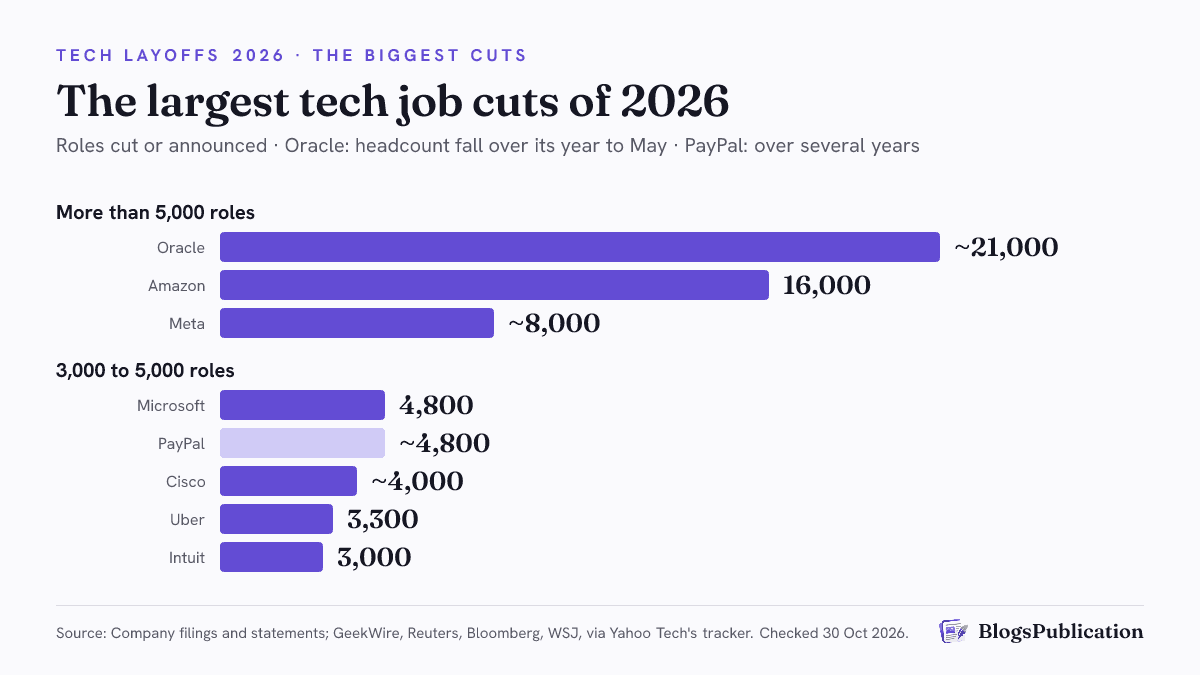
Tech Layoffs 2026: The Biggest Cuts So Far, and What Companies Said About AI
By early August, more tech workers had been laid off in 2026 than in the whole of 2025. The biggest cuts — Oracle, Amazon, Meta, Microsoft, PayPal, Cisco — what each company said about why, what happened in October, and what to do if it happens to you.
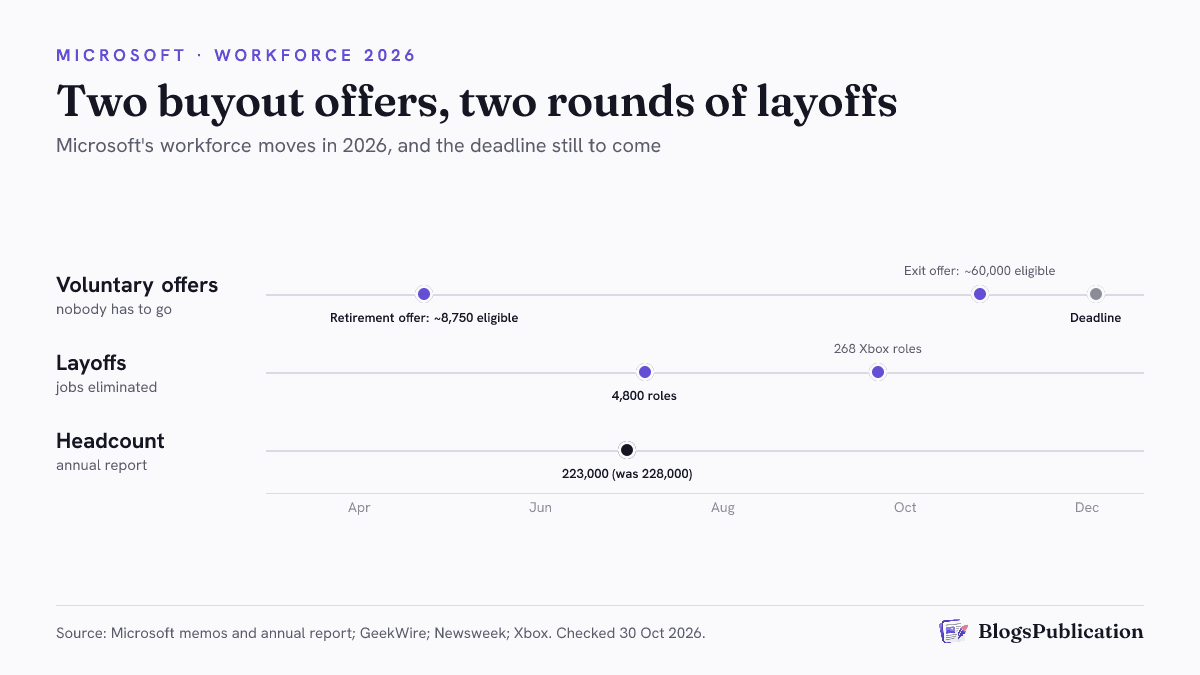
Microsoft Layoffs 2026: What the 60,000-Person Buyout Means
On 26 October Microsoft offered voluntary exit packages to about 60,000 employees, roughly a quarter of its staff. Who is eligible, what the package contains, the December deadline, why a company earning record profits is doing it, and whether layoffs come next.
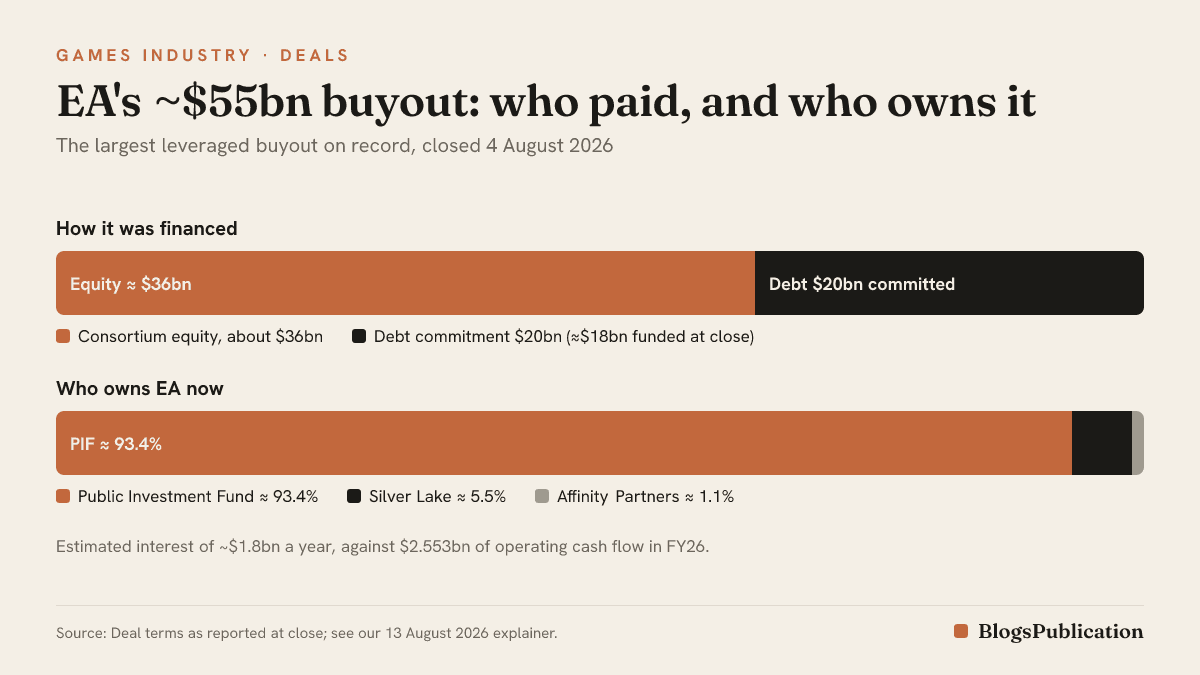
EA Went Private in the Largest Buyout on Record. The Debt Is the Story
Electronic Arts left the stock market on 4 August 2026 in a $55 billion deal. About $18 billion of borrowing came with it, and the annual interest on that debt is large enough to reshape what EA makes.
The Strait of Hormuz: Why One Waterway Sets the Oil Price
A channel 33 km wide at its narrowest carried a fifth of the world's oil. Traffic through it has collapsed to a tenth of normal, talks on reopening keep stalling, and the reason there is no workaround is mostly plumbing.